


In PCBA conformal coating processes, conformal coating flowing under a BGA is a reliability concern that should not be ignored. After high-temperature testing, thermal cycling, or environmental stress testing, hidden process issues can become much more visible, sometimes leading to BGA failure, intermittent contact, solder joint reliability problems, or unstable electrical performance.
In many failure analysis cases, engineers remove the failed BGA and find that conformal coating has wicked into the bottom pad area. This does not always cause an immediate failure, but it can become a significant reliability risk, especially for fine-pitch BGAs, low standoff packages, and high-density assemblies.
1. Does conformal coating under a BGA have an impact?
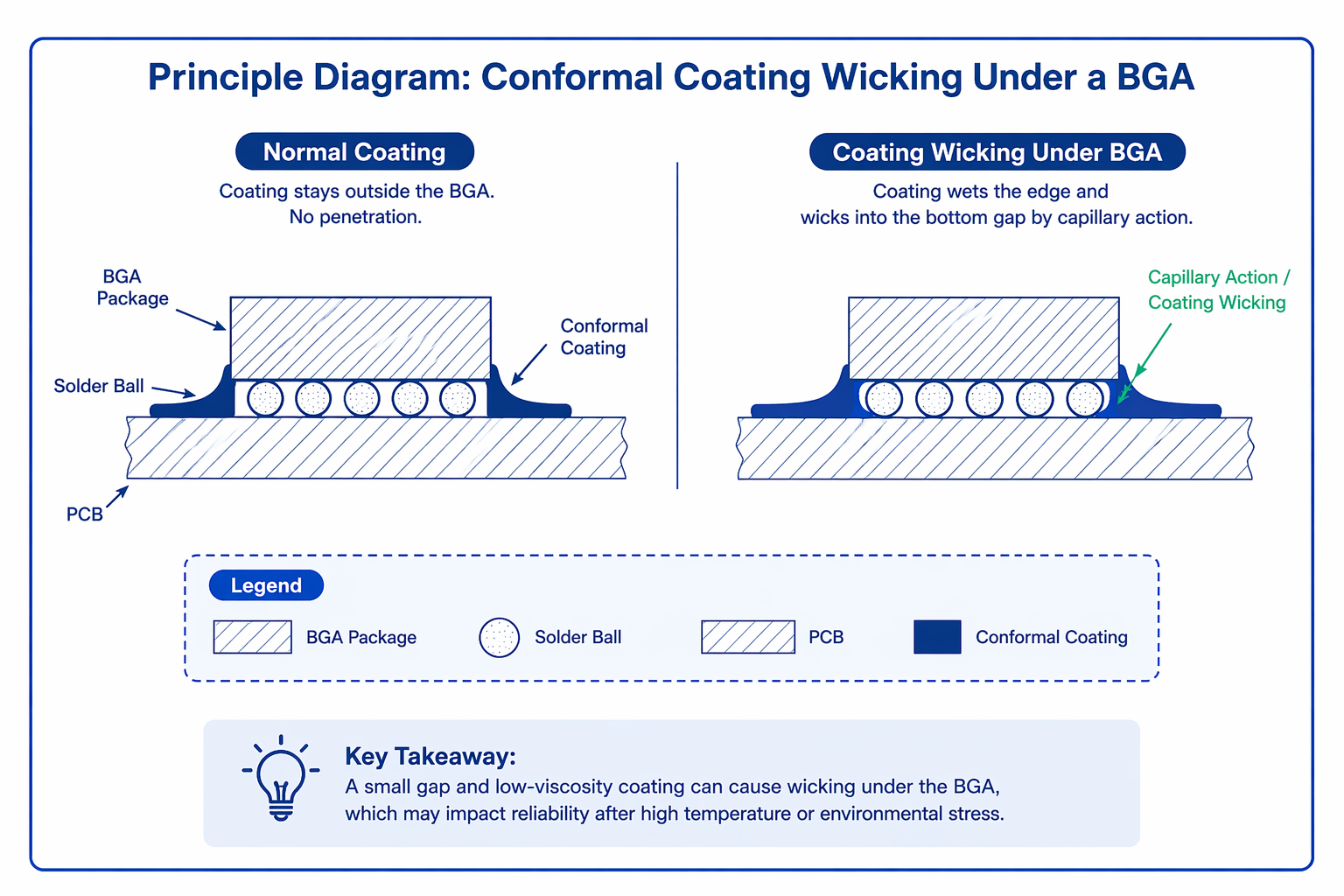
Yes, it can. The impact mainly depends on the package structure, coating material, application process, and the environmental stress the board experiences afterward.
1.1 Possible impact on solder joint reliability
If conformal coating remains under or around the BGA bottom area, it may affect the stress distribution around solder joints during thermal cycling or long-term high-temperature exposure. For BGAs with limited soldering margin, this can increase the risk of joint degradation or premature failure.
1.2 Increased difficulty in rework and failure analysis
Once coating penetrates under the BGA, later rework becomes more difficult. Heating, removal, cleaning, reballing, and root-cause analysis all become more complicated and time-consuming.
1.3 Interface issues after high-temperature exposure
Some coating materials may soften, expand, shrink, or change mechanical behavior under elevated temperature. In very small bottom clearances, the trapped coating may influence the interface around the solder joints and package underside.
1.4 Potential electrical reliability risk
Qualified conformal coatings are generally insulating materials, so they do not usually create direct shorts by themselves. However, if the coating mixes with flux residue, ionic contamination, or process residues, and the assembly later sees heat or moisture, there may be an increased risk of leakage current, insulation degradation, or long-term reliability issues.
2. Will conformal coating under a BGA always cause failure?
Not necessarily. However, it should be treated as a high-risk process issue.
Whether it results in failure depends on several factors:
- BGA standoff height
- Coating viscosity and flow behavior
- Applied coating thickness
- Capillary pathways around the package
- Board cleanliness
- Post-coating test conditions such as high temperature, humidity, and thermal cycling
In other words, conformal coating under a BGA does not guarantee immediate failure, but it can significantly increase the probability of reliability problems later. If a BGA fails after thermal testing and coating is found beneath the package during teardown, it should absolutely be considered a major suspect in the failure investigation.
3. Why does conformal coating flow under a BGA?
This issue is usually caused by a combination of material properties, package geometry, coating process settings, and surface conditions.
| Cause Category | Mô tả | Risk |
|---|---|---|
| Low package standoff | Very small gap under the BGA creates strong capillary action | Coating is more likely to wick underneath |
| Low coating viscosity | High flowability and easy spreading at component edges | Greater chance of penetrating the underside gap |
| Excessive coating volume | Too much wet film accumulates around the package | Residual material continues flowing under the BGA |
| Improper spray path | Nozzle directly impacts the BGA perimeter | Higher risk of forced penetration |
| Poor board cleanliness | Flux residue or contamination changes surface energy | Abnormal spreading and wicking behavior |
| Insufficient pre-cure control | Coating remains mobile too long before setting | Secondary flow under the component becomes more likely |
4. Besides edge dispensing protection, what other prevention methods are available?
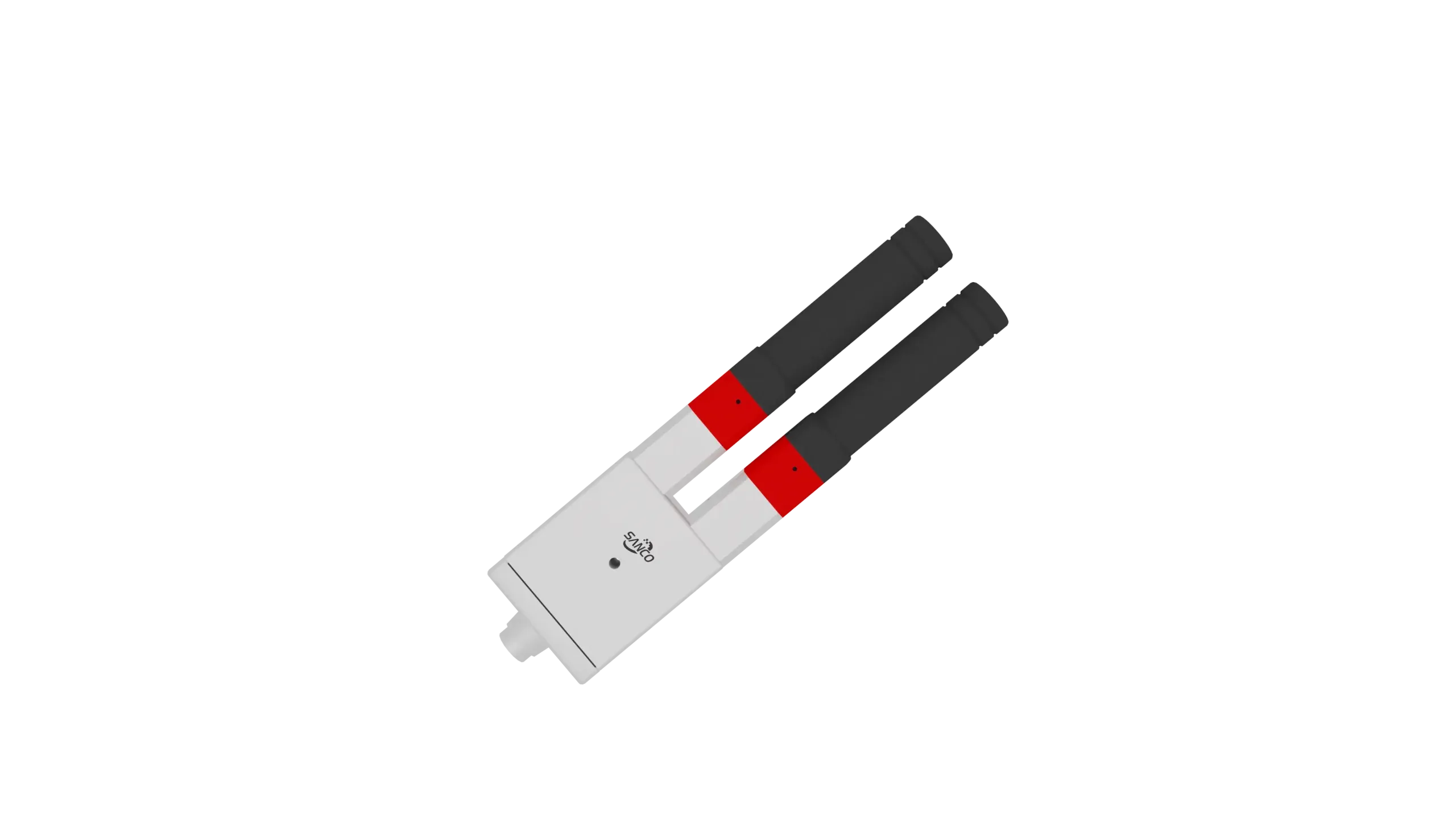
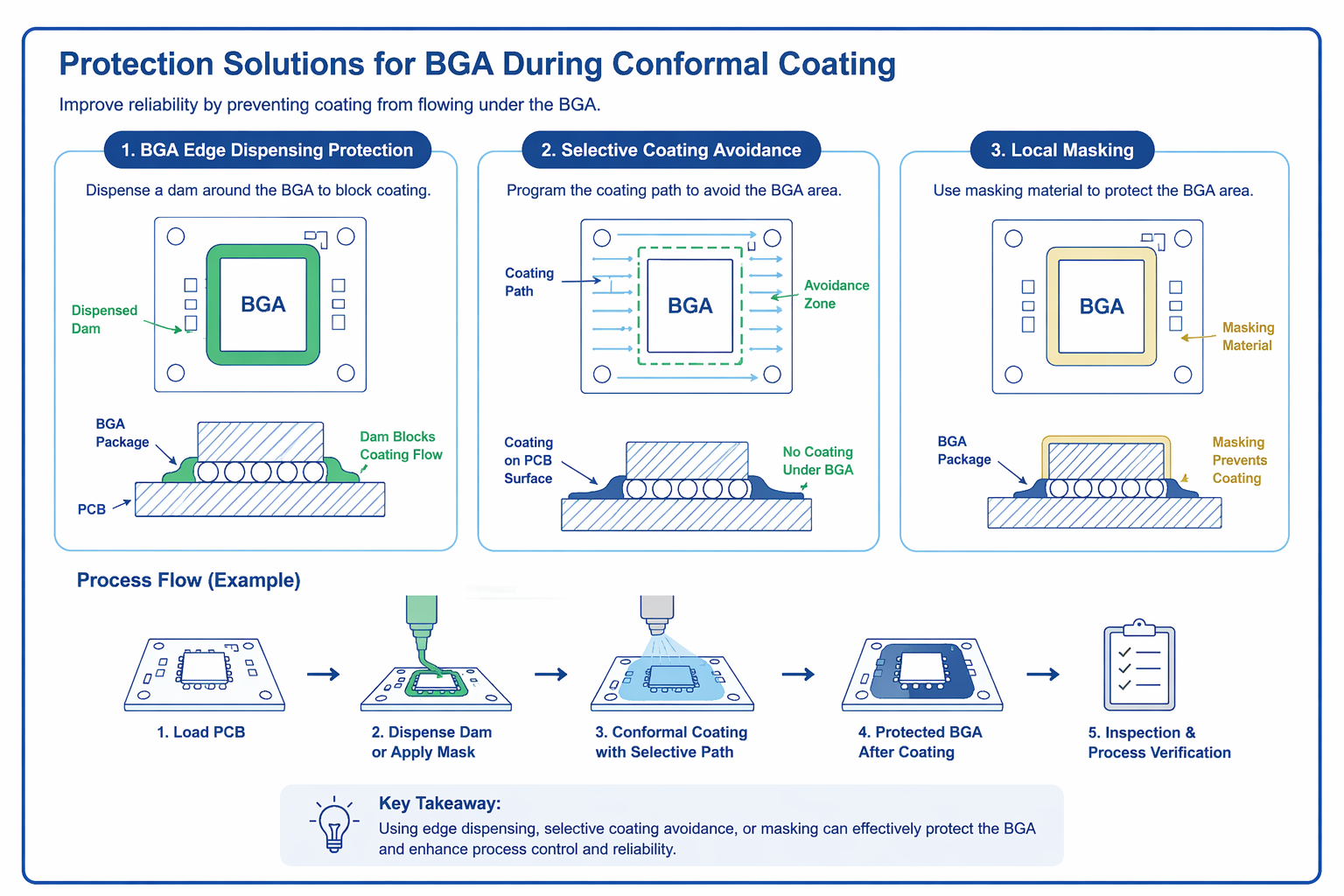
Dispensing a protective dam around the BGA is a common solution, but it is not the only one. In practice, the best results usually come from combining process control, material selection, path optimization, and masking strategy.
4.1 Use selective conformal coating and avoid high-risk areas
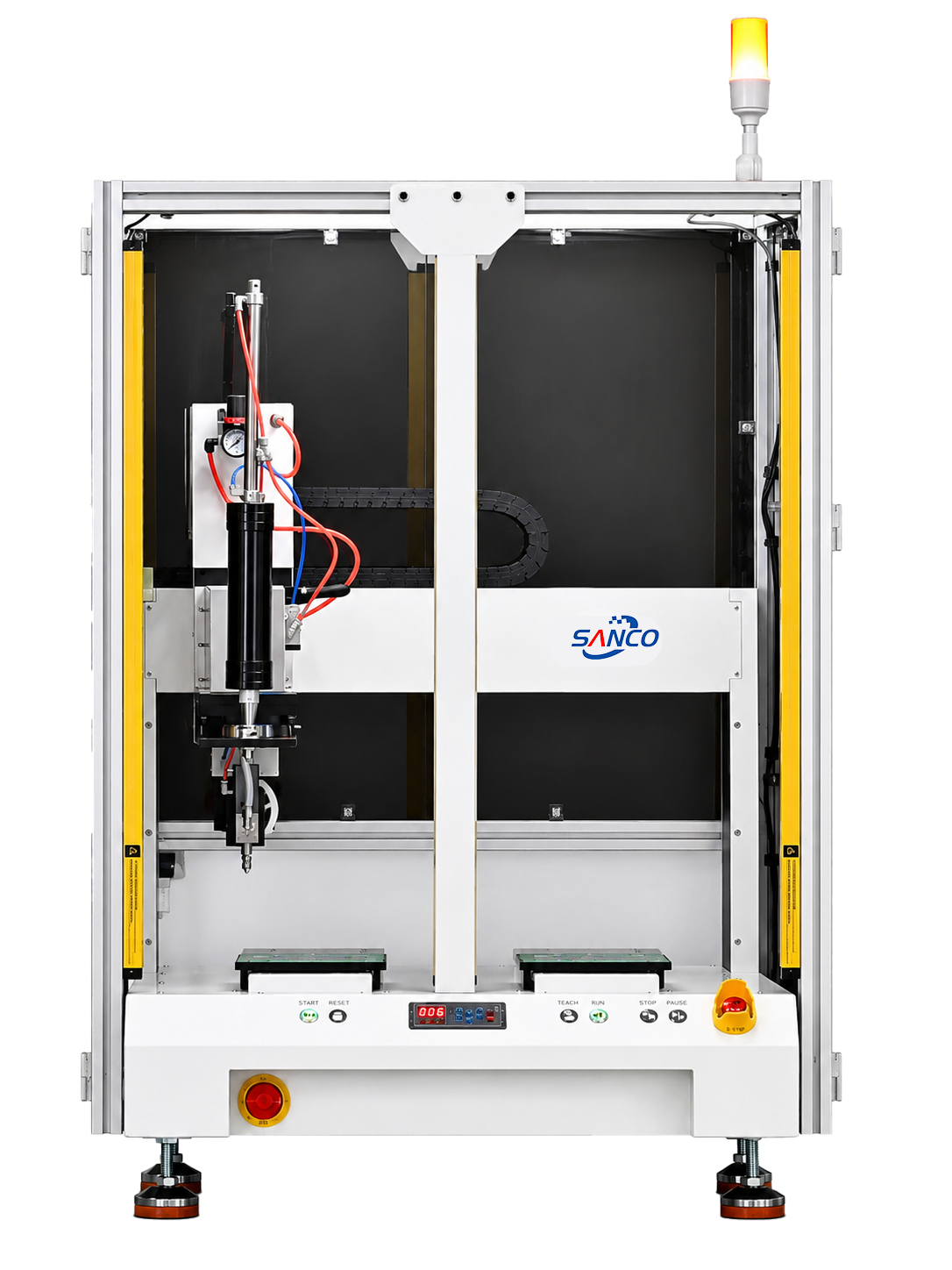
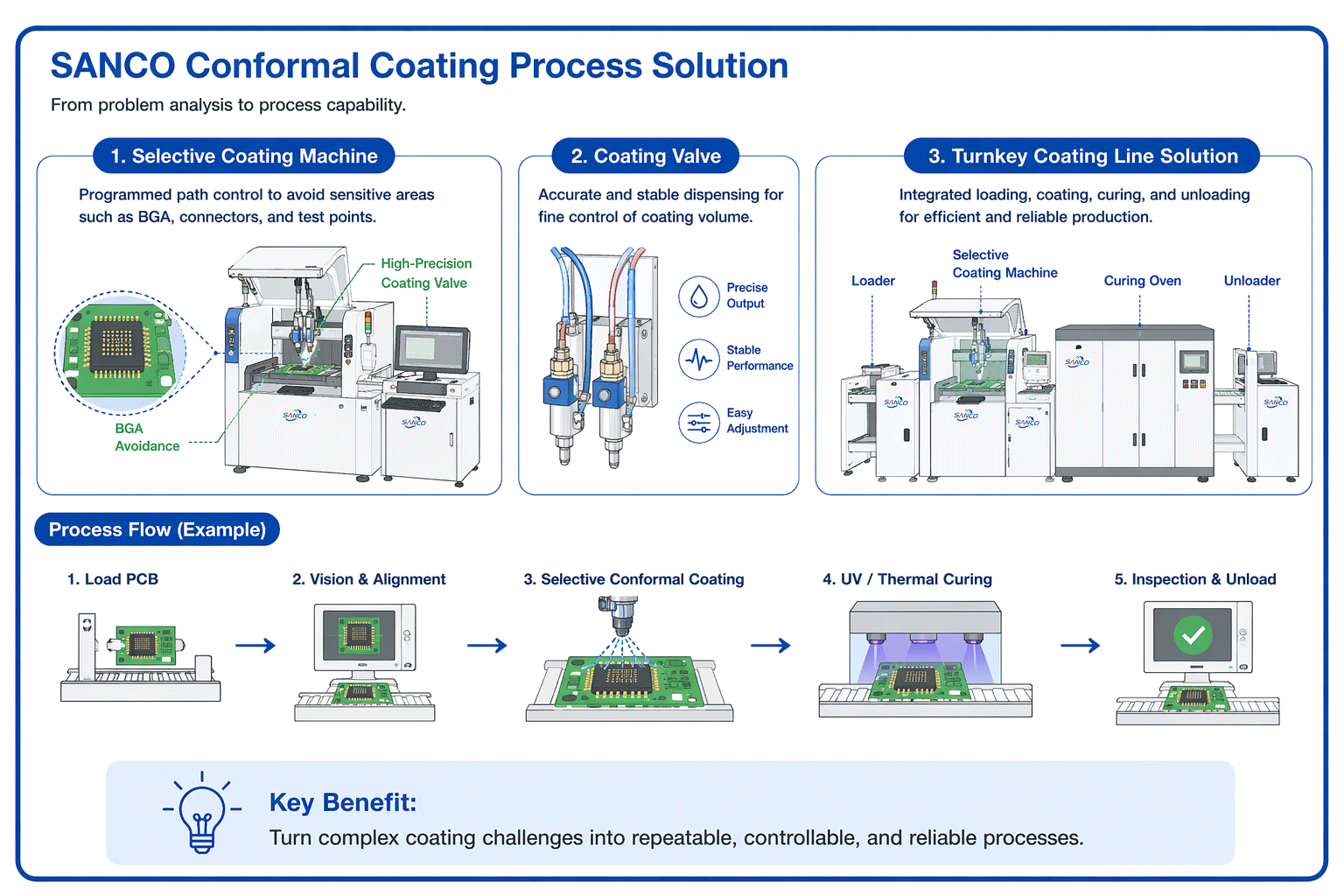
If the product design allows it, selective coating is usually better than broad-area spraying. By controlling the program path accurately, the coating valve can avoid the BGA edge region and reduce the risk of wicking underneath.
4.2 Optimize application path and dispense parameters
Useful process adjustments include:
- Reducing coating volume per pass
- Limiting dwell time around the BGA perimeter
- Adjusting valve height and coating angle
- Avoiding direct high-impact spray toward package edges
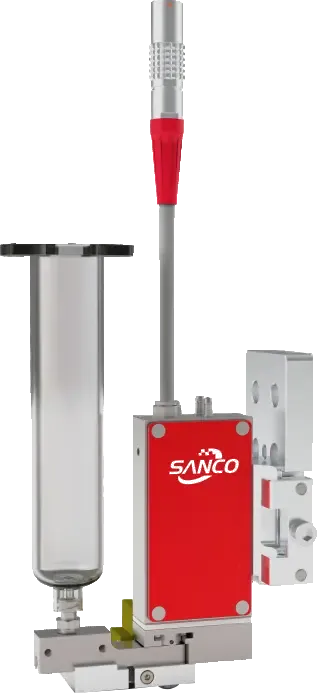
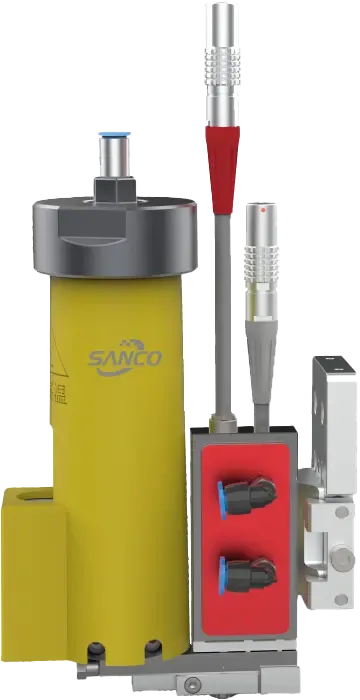
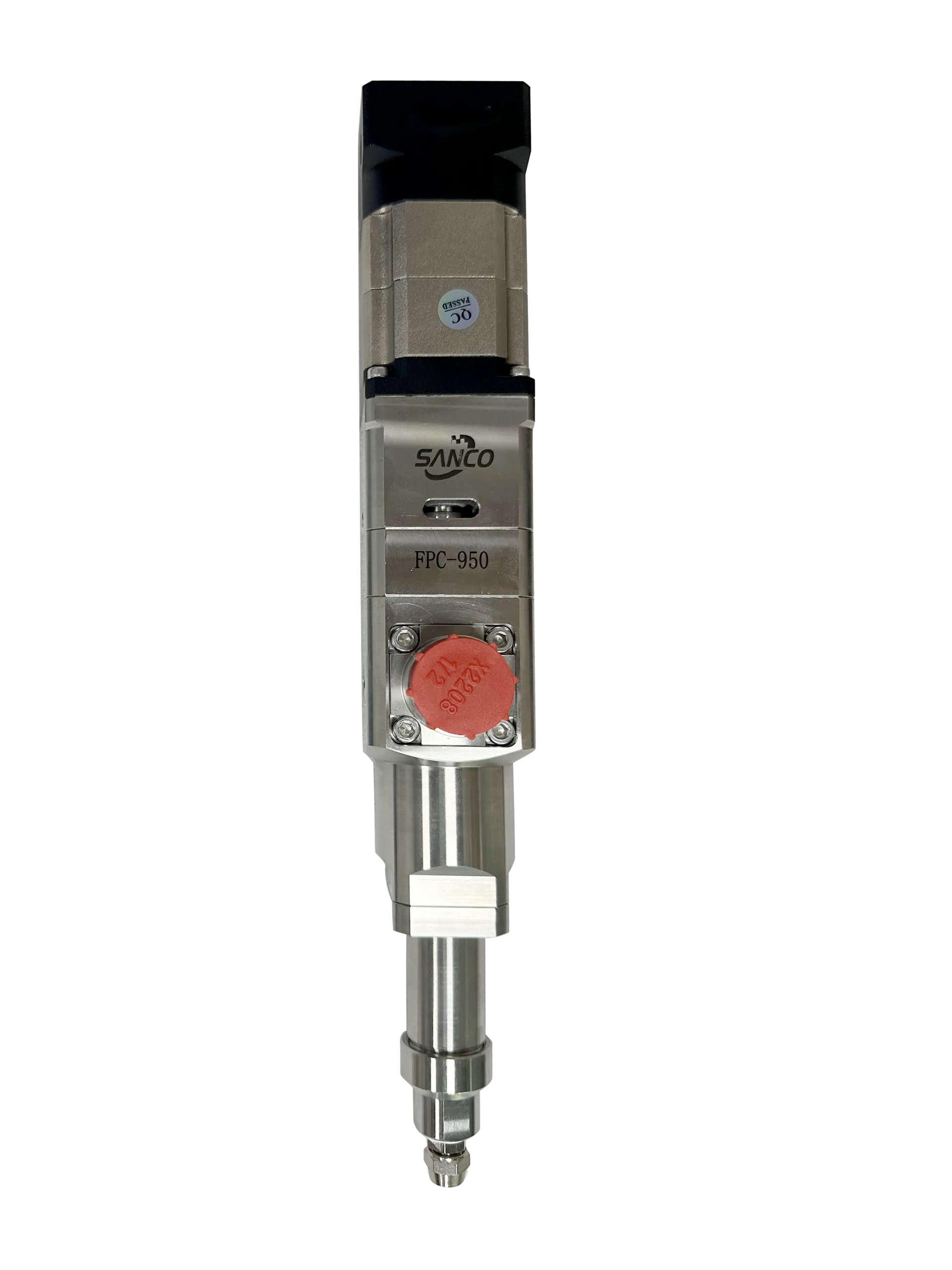
For precision zones, it is better to use a coating valve and process capable of fine volumetric control rather than simply applying more coating for extra coverage.
4.3 Use masking fixtures or temporary protective materials
For high-value or high-reliability products, BGA areas can be protected with:
- Peelable masking materials
- Custom masking fixtures
- Heat-resistant protection films
These methods are particularly useful during process validation, low-volume production, mixed-model manufacturing, or when the BGA area is especially sensitive.
4.4 Select the right coating material
Different conformal coatings have very different viscosity, surface tension, wetting behavior, and curing properties. For BGA-dense boards, it is important to evaluate:
- Độ nhớt
- Thixotropy
- Edge creep behavior
- Open time before cure
Lower viscosity is not always better. In many cases, very low-viscosity coatings spread more easily and are more likely to wick into the underside of low-clearance components.
4.5 Improve cleaning and surface consistency
If flux residue, ionic contamination, or uneven surface energy remains on the PCB, conformal coating may behave unpredictably and wick more aggressively. The BGA surrounding area should be carefully checked for cleanliness, and cleaning validation may be necessary.
4.6 Add X-ray or cross-section checks during process validation
For PCBAs containing BGA, QFN, connectors, and other sensitive structures, it is recommended to include additional validation methods during process introduction, such as:
- X-ray inspection
- Cross-section analysis
- Dye-and-pry testing
- Retesting after high-temperature and humidity exposure
This helps identify under-component penetration risk before volume production instead of discovering it only after field or reliability failure.
5. Comparison of common protection methods
| Method | Protection Effect | Implementation Difficulty | Typical Application |
|---|---|---|---|
| Dispensed dam around BGA | Good | Medium | Standard production projects |
| Selective coating path avoidance | Good | Low to Medium | Projects with automatic coating equipment |
| Masking fixture or protection film | Very Good | Medium to High | High-reliability or low-volume products |
| Changing coating material system | Medium to Good | Medium | Material evaluation stage |
| Reducing coating volume and improving parameters | Good | Low | Ongoing process optimization |
| Enhanced cleaning control | Medium | Medium | Boards with residue-related flow issues |
6. Recommended engineering approach
If conformal coating is found under a BGA after failure, the most practical engineering approach is usually:
- Confirm whether the BGA design has low standoff or strong capillary conditions
- Review coating path, valve type, volume, and thickness settings
- Check PCB cleanliness and residue condition around the package
- Evaluate whether the coating material is too mobile for this geometry
- Validate preventive options such as selective avoidance, masking, or edge dam dispensing
- Re-test the optimized process with thermal and humidity reliability verification
In mass production, relying on only one measure is usually not enough. The best long-term solution is a combination of material control + precise dispensing/coating + path optimization + validation testing.
7. Conclusion
Yes, conformal coating entering the bottom pad area of a BGA can affect reliability, especially after high-temperature testing, thermal cycling, or other environmental stress conditions. It may not always cause immediate failure, but it should be treated as an important process risk that deserves verification and control.
Besides dispensing protection around the BGA edges, other effective methods include selective coating path optimization, masking, material selection, cleaning improvement, and validation inspections. For products with strict reliability requirements, the best solution is to prevent coating penetration at the process level rather than only reacting after failure occurs.
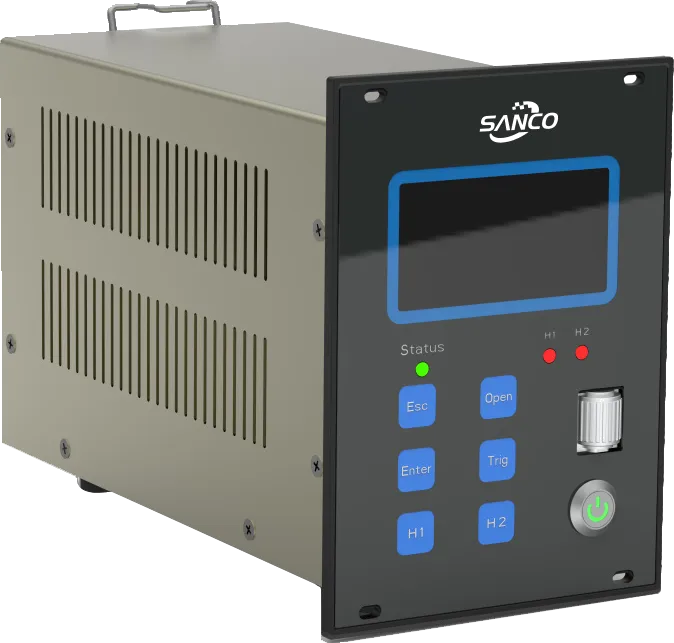
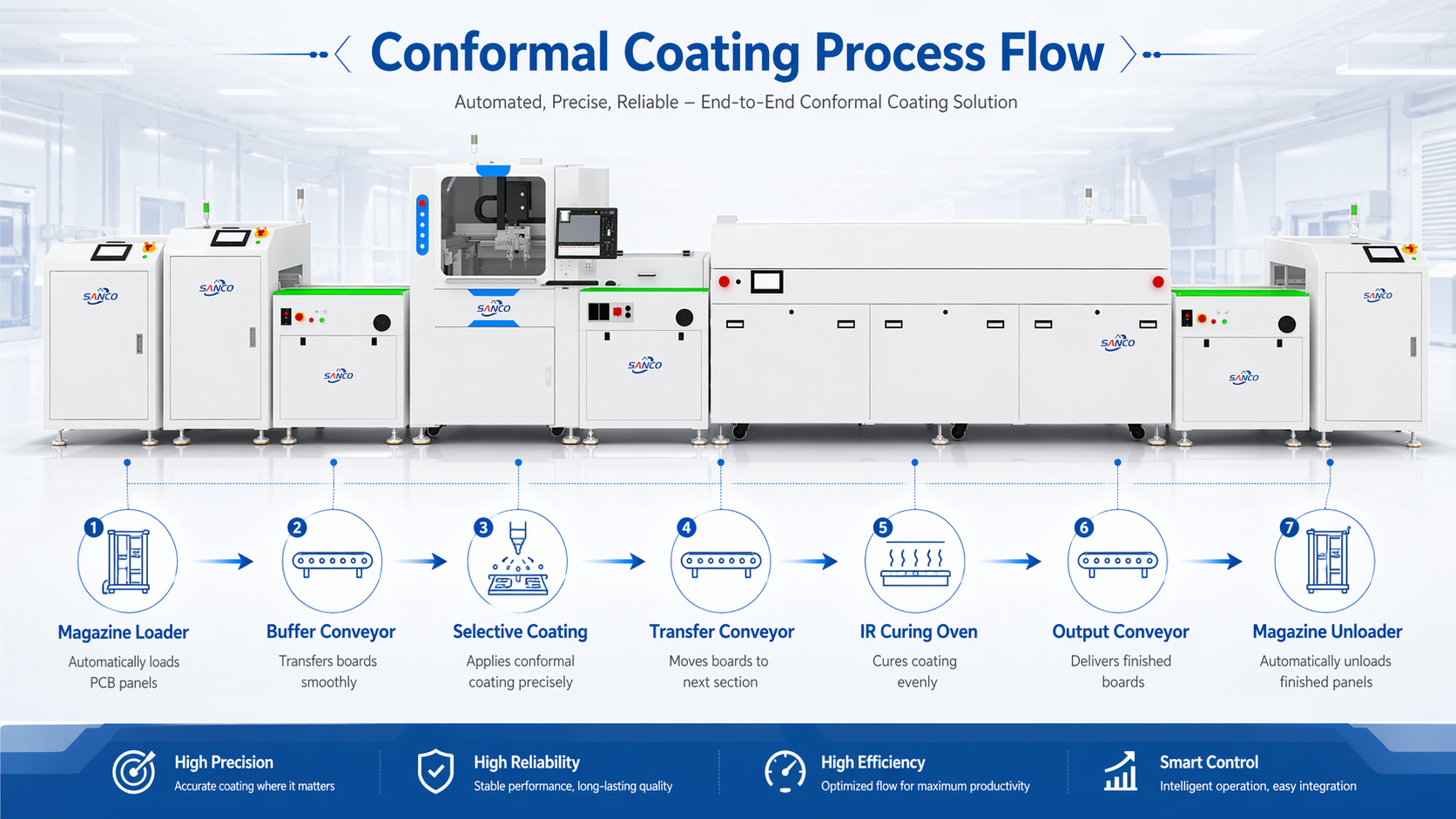
If you are evaluating a selective conformal coating process, coating valve solution, or automated PCBA coating line, choosing the right process window and equipment control method is critical for reducing risks around BGA, QFN, connectors, and other sensitive components.
Câu hỏi thường gặp
Does conformal coating under a BGA always cause failure?
No. It does not always create an immediate failure, but it can increase the risk of reliability issues, especially after thermal or humidity stress.
Why is BGA more sensitive to coating penetration?
Because many BGA packages have low standoff height, which makes them vulnerable to capillary wicking of low-viscosity coating materials.
Is dispensing around the BGA the only solution?
No. Selective path control, masking, cleaning improvement, and coating material optimization are also widely used and often more effective when combined.
What is the best way to verify the risk?
X-ray inspection, cross-section analysis, dye-and-pry testing, and environmental reliability validation are commonly used to confirm whether under-BGA coating penetration is affecting reliability.